Unlocking the Secrets of Tax-Free Income in Retirement
When I read The Power of Zero and Tax-Free Income for Life by David McKnight, I finally understood how taxes can sneak up on you even in retirement. I honestly thought my 401(k) would be tax-free but it turns out, that’s not how it works. The growth inside a traditional 401(k) isn’t taxed along the way, but when you withdraw it, the entire amount both your contributions and gains — is taxed as ordinary income even if you're retired since you did not pay for tax on the contribution before. That can even push you into a higher bracket or make your Social Security benefits taxable.
BOOKS
10/21/20252 min read

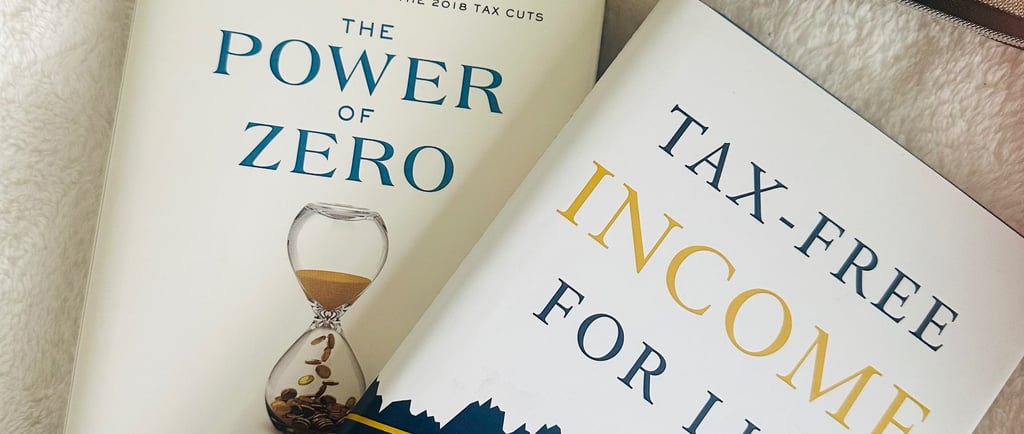
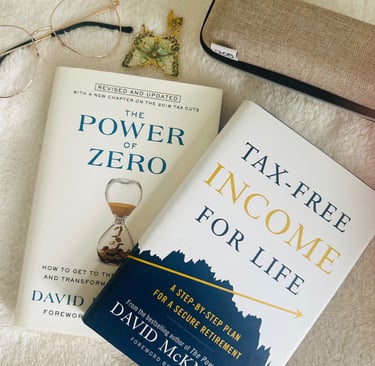
When I first started reading The Power of Zero by David McKnight, I thought I already knew the basics of retirement — save, invest, and live off your nest egg later. Simple, right? But this book made me realize there’s a lot more strategy behind how you withdraw money than how you save it.
Here’s what stood out to me the most: even when you’re retired, your income can still be taxed. I didn’t know that Social Security benefits could be taxable until I learned about something called provisional income — the total amount the IRS uses to decide if your Social Security will be taxed. It includes not just your Social Security checks, but also withdrawals from traditional IRAs, 401(k)s, and even long-term capital gains from stocks. Basically, the more taxable income you have, the more of your Social Security gets taxed.
That’s when McKnight’s advice clicked: it’s not about how much you make in retirement, it’s about how much you keep.
He breaks down how to create a tax-free retirement plan by being intentional with which platforms you use and in what order you fund them. The general idea is:
Max out your Roth IRA and HSA first. These accounts grow tax-free, and withdrawals are tax-free too.
Contribute to your employer 401(k) only up to the company match — don’t overfund it since it’s tax-deferred, not tax-free.
Then, look into Roth 401(k) or IUL (Indexed Universal Life) as other tax-free income vehicles, especially if you’re already investing in taxable accounts like individual stock portfolios.
I also learned about something called Roth conversion laddering, which is a strategy where you gradually convert money from your traditional IRA to a Roth IRA in smaller chunks to avoid jumping into a higher tax bracket. It’s one of those "hacks" that you might want to consider.
Reading both The Power of Zero and Tax-Free Income for Life changed how I see long-term investing. It’s not just about growing wealth — it’s about protecting it from future taxes. The goal isn’t just to have enough money for retirement, but to structure it so you actually get to keep what you’ve earned.
If you’ve ever felt unsure about which platform to invest in or how to plan for tax-free income later on, I highly recommend starting with these two books. They’ll make you rethink the “save now, worry later” mindset — because with the right strategy, later doesn’t have to mean paying more than you should.
This post contains affiliate links. If you purchase through these links, I may earn a commission at no extra cost to you.
Connect
Join us for book and jewelry inspiration.
Explore
Inspire
© 2025. All rights reserved.
Affiliate Disclosure: As an Amazon Associate I earn from qualifying purchases. I also participate in other affiliate programs, including Digistore24. This means some links on this site are affiliate links, and I may earn a commission if you click through and make a purchase — at no extra cost to you. I only recommend products and services I genuinely believe in and think you’ll love.